
How Is Literature Possible?
An Introduction to Erich Auerbach

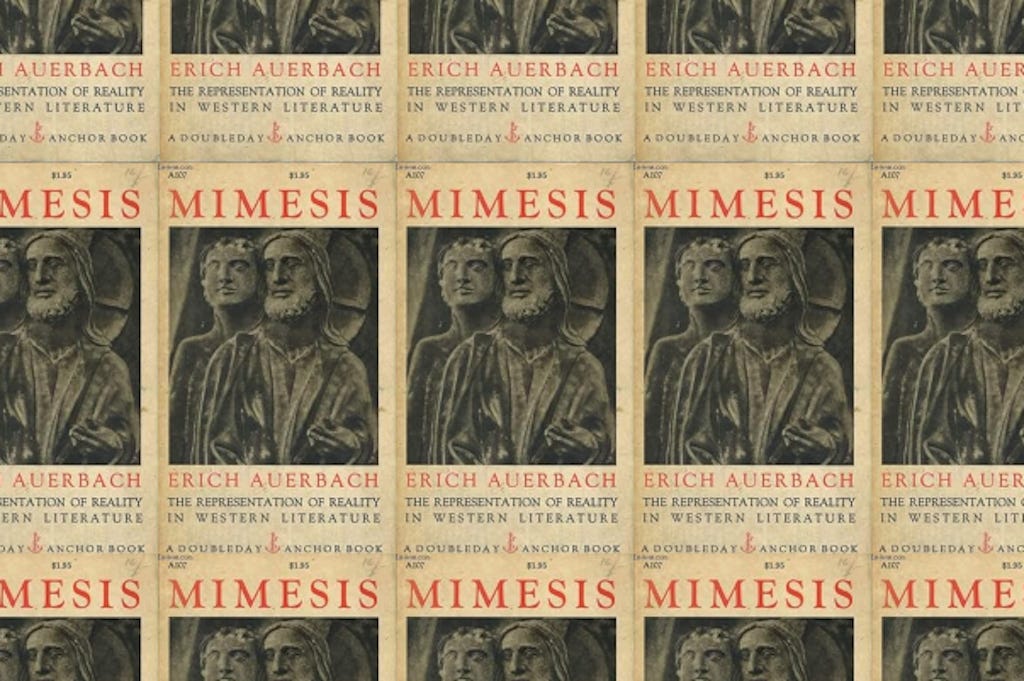
This paper was originally delivered as a lecture to undergraduate students undertaking a subject on literary theory, and is addressed in an informal mode. The previous weeks included a smattering of Aristotle, Kant, and a primer on close reading in a brief history of formalist approaches to criticism. This week on Auerbach is the first after the mid-semester break and is intended in part to prepare the ground for the subsequent classes on Marxist, Feminist, and Postcolonial theories. The structure of the talk is as follows: a) The question of literature’s historical genesis; b) An overview of Auerbach’s intellectual and political context; c) The historicist perspective on literary form and representation; and d) A summary of Mimesis in five stages.
How is literature possible? You may not ask yourself this very often, if at all. We tend to take for granted that books are written, that they are read, and that some of them end up as assigned reading. We have certain expectations about what we read: our novels will have clearly defined protagonists and a cast of supporting characters; their actions will be relayed by a narrator who is either omniscient or first-person; the narrative will be interspersed with direct dialogue; characters typically won’t break into song, and so on.
But when we look at literature over the longest timespan, from the first written works up to the present day, we find that our expectations come up short. Works of writing from earlier times can come across as stilted, and will be concerned with people and events that seem strange to us today. The earliest surviving works of writing are all preoccupied with heroes and kings and gods, and have nothing to say about the people who fed those heroes, who clothed the kings, or who sacrificed the most for those gods.
Closer to the present, we may be astonished to hear how shocked the literary public of the nineteenth century was by novels exploring the lives of the lower classes, or how the eighteenth century was scandalised by novels about the lives of women. There are large spans of history in which we have detailed records of marriages between dynasties, but no record of what these notables ate for breakfast, let alone the names of those who served them. In this context, the literature of the present day seems downright unique in the breadth of its expression and the depth of its sympathy for the goings on of everyday life.
How did we get here? How are we now able to make the everyday a serious topic of writing? This is the question that drives Erich Auerbach’s work in Mimesis, which begins with the most ancient texts of European literature and shows how changes in language expanded our consciousness of the world around us.
Naturally, it will do us well to consider the context of Mimesis, beginning with the biographical. Erich Auerbach was born in 1892 in Berlin and died in 1957 in the United States. He trained as a philologist, which is a kind of historian of language, whose work involves analysing and comparing the makeup of languages. That is, philology is not only concerned with the rules of language (which is the proper domain of linguistics) but with the many possible rules that language can have. This academic background is part of the legacy that Mimesis has left to comparative literature, which shares with philology a desire to look across national, cultural, and civilisational borders to discover the variety of human experience. At its most ambitious, this desire turns literary studies into a kind of anthropology, or the study of different formations of human life as expressed in written documents.
Auerbach wasn’t the first to make this move, as he was deeply influenced by the Italian philosopher Giambattista Vico, who was one of the first European thinkers to treat language itself as the key to understanding human nature. He was also influenced by the German philosopher Johann Gottfried Herder, who was interested in the origin and development of languages as a means of explaining the diversity of human cultures. Both Vico and Herder were part of the Enlightenment (and counter-Enlightenment) movement in European philosophy, and sought to use their linguistic discoveries to give laws to the movement of history—to say: Historical events may appear random and unpredictable, but if we study them closely, we can find the basic principles that underly them. Their wish was to turn history into a science, as a systematic body of knowledge founded on basic principles. For them, these principles were linguistic, such that a proper understanding of the laws of language could shed light on the course of history. We will see, however, that Auerbach isn’t so bold in making these sorts of proclamations about the laws of history.
Another significant biographical point is that Auerbach was Jewish by birth, and of the same generation as other great Jewish-German thinkers like Theodor Adorno and Walter Benjamin, or the Hungarian Georg Lukacs. Like these three contemporaries, he was born into an assimilated family, who had taken up governmental and commercial positions within gentile society while retaining an ambivalent and varied relationship with their cultural and religious heritage.
We can see the cross-cultural values of Auerbach’s thought in the first chapter of Mimesis, where a central place is afforded to the book of Genesis as a text that must be understood in the context of Judaism. Auerbach does not take it for just its religious meaning; rather, he wants to show how it works as a piece of writing, as a cultural rather than a purely religious document. Speaking historically, what the book of Genesis introduced is not only a new way of thinking about god (monotheism) but a new way of organising thoughts in language, which is distinct from the types of language we see in classical Greek writing of the same period.
If you read through the rest of Mimesis, you can see Auerbach’s awareness of how the cultural innovations of Judaism were picked up by early Christian culture. Later chapters deal with the Church Fathers, medieval mystery plays, and The Divine Comedy. All of these texts are treated both for their religious content and for their linguistic innovations—that is, for their contributions to a secular culture. In an earlier book Auerbach even described Dante as the “poet of the secular world,” which may be an odd claim to make about such a religious writer, though it is motivated by his reading of Dante’s contributions to a culture which is not only Christian. Mimesis is at least partly about the combination of classical, Jewish, and Christian influences which together make up “European” culture. This marks Auerbach’s project as a distinctly humanist one, and as philosophically of a piece with that great flourishing of German intellectual life in the early twentieth century, before the Second World War.
This is the intellectual background to Auerbach’s thought, but the more immediate situation of the writing of Mimesis is the rise of German fascism in the 1930s. Auerbach was removed from his teaching post in 1935, due to the Nazi’s racial segregation laws, and in 1936 he fled to Istanbul, Turkey. As he tells the story, he wrote Mimesis while he was stuck on the edge of Europe, away from his scholarly roots. In this respect, we can think of Mimesis a work of exile, picking up scraps of European culture and attempting to piece together its history. Hence, the work is centred mostly around short passages, a method of close reading, with a minimum of citations and other scholarly apparatuses.
This story a little unfair to Auerbach’s Turkish hosts. We do know that multiple chapters of the book depended upon Auerbach’s access to the archives of early Christian writings housed in Istanbul. Still, his account perhaps expresses his misgivings about the role he was given in Turkey, which at this time was a country undergoing its own process of modernisation (i.e. westernisation), and so employed European scholars to give guidance on the construction of “Western Civilisation.” But Auerbach’s own experience is of the fraught nature of this so-called “civilisation,” to the study of which he had devoted his life, and from which he was in exile.
Mimesis ends with an ambivalent vision of world literature: the homogenisation of world cultures under the singular model of “westernisation,” which includes everyone in its cultural sphere even as it erases the particularities of local cultures. As a philologist, Auerbach’s interest is in these particularities, which seem on the verge of being lost, smoothed out, or repackaged for export as part of a Eurocentric “world literature.” The culmination of the work is therefore a sort of decolonial perspective, which would be an inspiration for later scholars like Edward Said (who wrote the preface for the most popular edition of the book).
Having discussed some of the particulars of Auerbach’s life and work, we may now ask where he sits within the wider narrative of literary criticism. By placing him alongside Vico and Herder, I have introduced him as a representative of “historicist” theory—that is, as someone who wants to explain the shape and the content of texts by reference to their historical origins. But this “historicist” designation does not mean much if we don’t know how it applies to the details of Auerbach’s thought, so I would like to elaborate on his vision of history with reference to two core concepts of literary criticism: namely, form and representation.
When we talk about literary form, we often forget that it has a history. We can ask, “what is a sonnet?” and give an answer that seems stable and self-evident. Well, a sonnet is a poem of fourteen lines, composed of either an octave and a sestet or three quatrains and a couplet; in English it is written in iambic pentameter, meaning each line has ten syllables with alternating stresses. Thematically, it is associated with love poetry and tends to introduce new perspectives on its subject at the halfway point (the volta).
But why is this so? Why all these rules to say what is a sonnet and what it isn’t? The simple answer: that’s just how sonnets have been written! The form was invented by some clever poet in thirteenth-century Italy and its rules were formalised by Petrarch and later revised by Shakespeare. When we write sonnets, we aren’t just following arbitrary rules (though maybe we are, to some extent) but rather we are choosing to participate in the ongoing history of a particular form of writing. This is to say that a form carries this history with it; it is part of its meaning. A sonnet isn’t just a collection of fourteen lines, et cetera; it is a conversation with the sonnets that came before it. This is one way of viewing literary history: it is the reviving of tradition for the present (i.e. when an Ezra Pound says “make it new,” he means to make tradition anew).
But to say that form has a history isn’t only to say that it is determined by its past. It is also to say that forms are not fixed, that they change over time, and that these changes are part of what is built up over the centuries of history. We can do a kind of archaeology of language by asking: What has accumulated in the forms available to us? This line of thinking is different from the traditionalist perspective, because it does not view the history of literary forms as static. The forms are not set in stone—quite the opposite, we discover that they are arbitrary (or contingent—they could have been otherwise). One of the big questions for Auerbach is why and how did we arrive at the literary forms available to us at the present? How can we explain the transformations of written language over the course of centuries? We’ll return to Auerbach’s answer in a moment, but for now we can make clear that this eye for contingency is one thing that separates the historicist from the traditionalist.
Now let’s turn to representation, which has the honour of being flagged in the subtitle to Auerbach’s book: The Representation of Reality in Western Literature. Of course, we can say that this is the second time the work appears on the book’s cover, because its title, Mimesis, is the Greek work for representation. This is one of the terms that comes down to us from the oldest surviving work of literary criticism, the Poetics of Aristotle, which will be as a good a place as any to start in our situating of Auerbach’s account of the term.
To speak broadly, Aristotle is a formalist, because he believe that we can break down our experience of the world to its constitutive parts to extract the basic forms that shape all experiences. So when he turns to poetic representations, Aristotle is especially concerned with how we receive these and the feelings of catharsis, pleasure, or ambivalence they provoke. From these definitions we can then make categorical judgments about the adequacy of one artwork or another depending on how well they conform to these expectations. For instance, Oedipus the King is a great tragedy because it ticks all the boxes: it deals with a protagonist from the upper class, its drama is centred on the travails of his noble character, there is a unity of location and action, and so on. Whereas, by contrast, Hippolytus or Trojan Women are lesser tragedies because Euripides gets too carried away in the shocks and the excitements of his dramas that he misses one or another of these elements. That is, following Aristotle, we have described an ideal form of tragedy, hopefully with a representative example, and now we judge examples of tragedy against this ideal.
But to define the form of tragedy in this way is also to delimit it. Aristotle’s theory of tragedy carries with it the explicit judgement of what topics deserve to be treated in that genre. He says that tragedy must concern itself with people occupying the higher classes of society (aristocrats, from áristos, Greek for “best”), while comedy is concerned with the lower classes. This is another way of saying that only the upper classes are worthy of the dignity that comes with tragic drama, or that they possess a kind of representational privilege, which keeps the rulers of society up above the rabble. Seen from the other side, this is also the judgment that the lower classes are only fit for comedic depictions, in farcical and bawdy tales, and never for the serious heights of tragedy. Not only are these groups of people separated by their social status and the rights afforded to them: they are separated by the styles in which they may appear in cultural works.
But we know today that this separation of styles no longer holds. Today we have comedies about politicians and tragedies about everyday people. And what is more, we have works of drama that follow neither the conventions of tragedy nor comedy, which instead show a freedom of style that would have been unimaginable to the ancient Greeks. So the question Auerbach asks, and the one with which I began this lecture, is “How did we get here?” How did our forms of representation change such that we can have a work like Virginia Woolf’s Mrs Dalloway or James Joyce’s Ulysses, in which the minute and even trivial details of everyday life are taken up with the seriousness that was once reserved for characters like King Agamemnon or the prophet Abraham? What are the steps that have led us from the sharp class-discrimination of the classical separation of styles to a modern literature in which virtually anything is worthy of serious representation?
The answering of these questions is the project of Mimesis, which presents a history of our forms of representation, illustrated by representative texts spanning from Homer to Woolf. On the face of it, the work is concerned with the big-picture shifts in cultural history that have raised the status of everyday people, though Auerbach’s analysis is often carried out at the granular level of grammar. One remarkable feature of this approach is the way that we can read the widest changes in historical eras through their attendant changes in the smallest features of language. It is not a short book, being comprised of twenty substantial chapters, though I will attempt to condense it down to five key moments:
1) The Two Lineages of Western Literature
We have already seen that Mimesis begins with a comparison of classical Greek and ancient Jewish cultures. Both the Odyssey and Genesis are written in epic styles, though they pursue different strategies of representation. While one presents its subjects immediately and vividly, the other is elliptical and obscure. Homer shows us everything here and now, in the brightest colours and clearest description, even if it means interrupting the suspense and momentum of the narrative. By contrast, the author of Genesis tells us barely anything, leaves much up to the imagination, which needs to fill in the obscurities with a gravitas that isn’t directly spoken.
Paradoxically, in Auerbach’s analysis, the paucity of description in the Biblical text actually leaves room for a psychological depth that is absent from the Homeric epic. While the characters of Achilles and Odysseus are fully illuminated to themselves and us, they are also forever self-same, fixed as mythic figures rather than literary characters. The pathos of Abraham’s near-sacrifice of Isaac lies in the silence of the actors, the uncertainty of their thoughts and motivations, and the sole focus upon their actions, which are illuminated against the vast darkness of what the text does not reveal. It will take centuries, but eventually this indirect style will set off a revolution from within the rigid literatures of classical Europe.
2) Classical Breakdown and Christian Synthesis:
Before the Biblical text can make its mark on western literature, the older forms of classical poetics must first come to ruin. In Auerbach’s analysis, the writing of the late Roman Empire shows the signs of a culture grown rigid and arbitrary. To support this contention, he pays his attention to the grammatical structure of classical writing, which is highly “hypotactic,” or ordered by connective and subordinating words. A hypotactic phrase will contain plenty of works like “if,” “therefore,” or “so,” which make clear the logical relations between statements by showing how they depend upon one another. But by late antiquity many of these words had lost their logical functions and became meaningless joiners. You might think of someone telling a story, “So I did this, so they did that, so we went here or there,” etc.—although this “so” should denote a causal relation, it doesn’t do anything except tack another bit onto the sentence. In this manner, though the Romans kept writing in Latin, their language actually began to lose the freedom of expression that it had at an earlier time.
This is something Auerbach contrasts with the range of expression discovered by the Christian writers under the stylistic influence of the Old Testament. The biblical style is highly “paratactic” or structured around conjunctions: “and, and, and.” You can see this in the very first lines of Genesis: “And the earth was without form, and void; and darkness was upon the face of the deep. And the Spirit of God moved upon the face of the waters. And God said, Let there be light: and there was light.” Whereas the late Latin “so” gives the false impression of a logical subordination, the biblical “and” actually allows its contents to sit alongside one another without being judged higher or lower. The passage builds up a rhythm of one thing presented after another, each on their own terms, without needing to determine in advance how they relate to one another. It’s a long story, but the paratactic style of the Bible ends up as one of many key moments in the development of our present descriptive abilities.
3) Post-Classical Levelling of Representation
Alongside this stylistic evolution came the expansion of serious narratives to a greater range of people, occupying a diversity of social roles. In the New Testament we see the son of a carpenter assume the role of son of God, accompanied by fishermen who become his apostles. Among the Church Fathers we see confession narratives that depict the lives, temptations, and conversions of ordinary people as matters of the highest importance. Auerbach pays special attention to tragic seriousness that is afforded to ordinary people. Nobody in the Greece of Aristotle would have considered the Apostle Peter’s denial and repentance a particularly noble topic, but the Gospel writers make the spiritual trial of this fisherman a tale of universal significance. All subsequent Christian culture is founded on this shattering of classical representational norms, which would have denied the full range of human experience to all but a privileged few. Although today we tend to think of the period stretching from the Western Empire to the Renaissance as a time of social and political regression, it was also a time of great cultural expansion, giving witness to the gradual breaking down of the Aristotelian classism of styles under pressure from the doctrine of universal salvation.
4) The Invention of Styles
In the development of modern literature we can then see the gradual expansion and articulation of a newfound freedom of representation, transferred from religious to secular culture. In works like the essays of Montaigne, the plays of Shakespeare, Cervantes’ Don Quixote, and the realist novels of the nineteenth century we see genuinely new ground broken on both the levels of form and representation. These writers developed new techniques for the modification of language, for stringing together more complex sentences, for incorporating a wider variety of images into fewer words. These formal innovations arrive hand-in-hand with an expansion of the material considered fit for representation: writers began to take seriously the smaller details of everyday life, the inner tumult of individual psychology, and the many different ways that narrative perspective can reshape events to produce new feelings and new moods. Remember, as a philologist, Auerbach is interested in the uses of language—language as a series of techniques, which have become more or less sophisticated in its uses through the ages.
5) The Serious Imitation of the Everyday
And where does all this end up? In brief, the modernist novel, as typified by Virginia Woolf and Marcel Proust. Woolf’s Mrs Dalloway depicts a single day in the life of its protagonist as she prepares to host a party. So the narrative ranges from the trivial details which she tries to set in order to the many distractions that cross her mind as she reflects on her life and her place in the world. Woolf’s ambition is to make the moment-by-moment life of Clarissa Dalloway present to us, which means stitching together a wide array of material that would normally not hold much significance, which would be forgotten almost as soon as it has passed by, but which Woolf captures and communicates to us. Proust’s In Search of Lost Time performs a similar operation, but directed toward the past rather than the present. His narrator gives a gradual elaboration of his life from childhood, with countless digressions on the lives of the people who affected him in some way. In total, the work spans over three thousand pages! But it all springs from one encounter: the taste of a madeleine cake which reminds the narrator of some dimly remembered childhood memory, which the entire rest of the novel is designed to recover.
But to return to Auerbach, the question through all of this must be: How are these remarkable feats of literary representation possible? And the answer he gives is a historical one: The literature of the present did not emerge from a vacuum. It is built upon a long history of formal innovations and stylistic expansions, which have gradually opened up the world to the art of writing. Though we may take our language for granted, it has been a long time in the making, and by the study of its historical forms we can understand something about how we now think of ourselves and our place in the world.